
Building Automation: What It Is, How It Works, and the Role of Analytics in Achieving Building Intelligence
Modern building management has evolved far beyond simply automating equipment. Today, facility owners and managers require systems that not only control building operations but also provide actionable insights based on real-time data.
Growing demands for energy efficiency, sustainability, occupant comfort, and operational optimization have accelerated the adoption of building automation systems across commercial and industrial facilities. By gathering and studying how a building operates, building automation has become the base for creating building intelligence, helping companies make quicker, smarter, and better-informed choices.
What Is Building Automation?
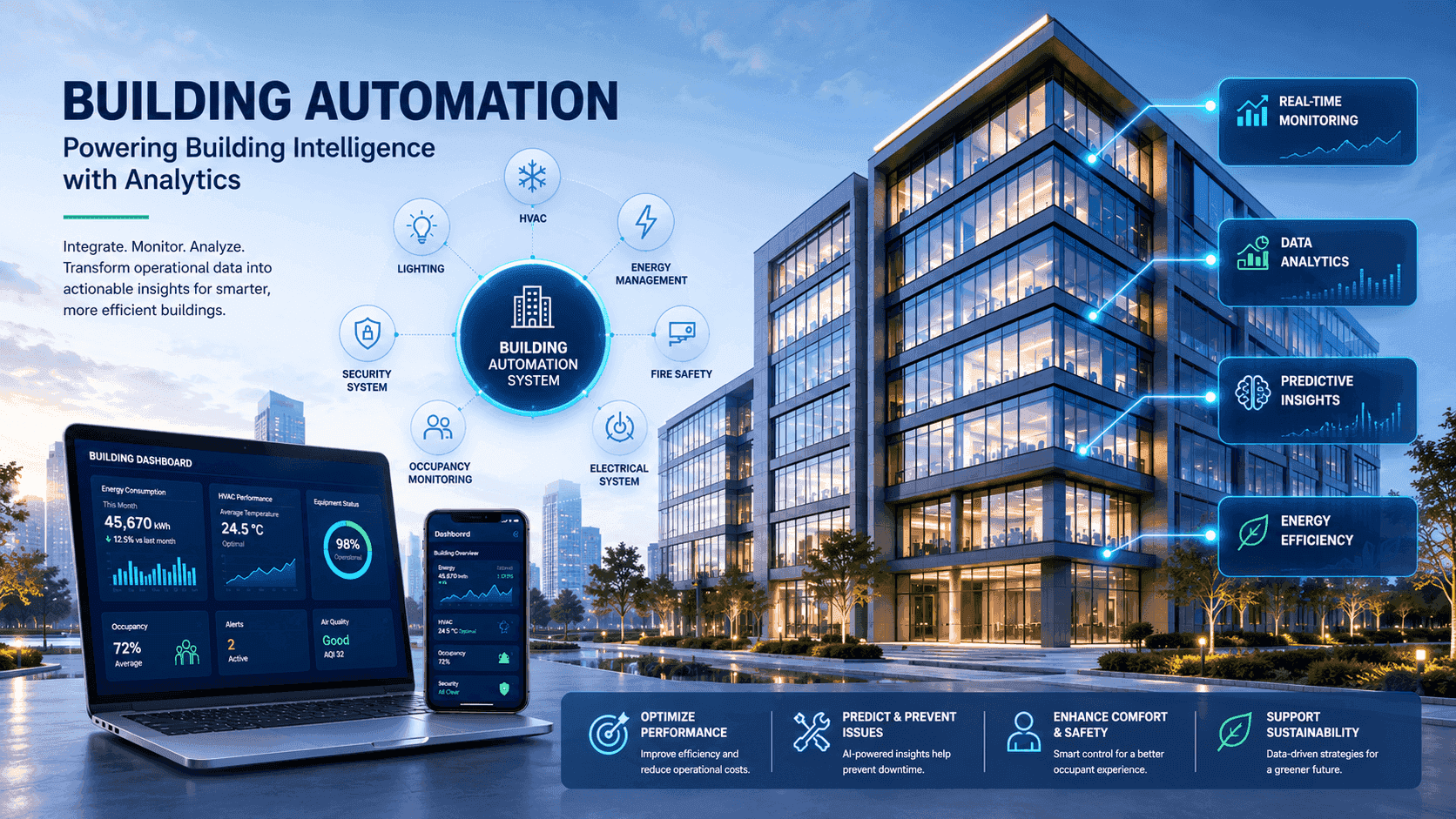
Building automation refers to the integration of multiple building systems into a centralized platform that enables automated monitoring and control. A building automation system usually takes care of managing critical building infrastructure, including lighting, electrical distribution, HVAC, security systems, fire safety, and other utilities.
As technology continues to advance, a building automation system has evolved from a simple control platform into the backbone of smart building automation. Rather than only executing automated commands, modern systems continuously collect operational data that can be analyzed to improve building performance.
It is important to understand the differences between the following three terms:
- Building Automation focuses on automating building operations.
- Smart Building connects different building systems through digital technologies, allowing them to communicate and share information.
- Building Intelligence leverages analytics, artificial intelligence (AI), and machine learning to transform operational data into actionable insights for proactive decision-making.
In other words, building automation serves as the essential foundation for implementing advanced analytics and building intelligence.
Building Automation Systems as a Source of Building Data
One of the greatest advantages of a building automation system is its ability to continuously collect real-time operational data from multiple building systems.
Typical data sources include:
- Energy consumption
- HVAC performance
- Indoor temperature and humidity
- Lighting status
- Electrical systems
- Security and access control
- Fire alarm and life safety systems
- Occupancy levels
- Indoor Air Quality (IAQ)
The more systems that are integrated, the more comprehensive the available data becomes. This integrated approach is what enables smart building automation, allowing facility managers to view and analyze all operational information through a centralized dashboard.
From Real-Time Monitoring to Building Analytics
Real-time monitoring is only the first step toward intelligent building management. The real value emerges when operational data is processed using analytics.
Through building analytics, facility managers can identify energy consumption patterns, detect operational anomalies, and uncover opportunities to improve overall building performance. Interactive dashboards show complicated data in a simple and easy-to-understand way, helping people make quicker and smarter decisions.
Today, AI-powered analytics and predictive models can even forecast potential equipment failures before they occur. This proactive approach supports predictive maintenance strategies, helping organizations reduce unplanned downtime, extend asset life, and optimize maintenance schedules.
Benefits of Analytics-Driven Building Intelligence
Implementing building automation with advanced analytics provides significant business and operational benefits, including:
- Optimizing energy consumption based on real-time operational data.
- Supporting predictive maintenance to reduce equipment failures and maintenance costs.
- Improving occupant comfort through environmental and occupancy analytics.
- Increasing operational efficiency while lowering operating expenses.
- Supporting ESG initiatives and sustainability reporting with accurate building data.
- Helping facility managers make faster and more informed decisions based on real-time data.
Rather than functioning solely as an automation platform, a building automation system becomes a strategic source of business intelligence that continuously improves facility performance.
Applications of Smart Building Automation Across Industries
Today, smart building automation is widely implemented across various industries, including office buildings, hotels, hospitals, shopping malls, manufacturing facilities, and data centers.
Organizations operating multiple facilities can also leverage centralized analytics to monitor and compare building performance across different locations. This centralized visibility helps maintain consistent operational standards while simplifying facility management on a larger scale.
Tips for Choosing a Building Automation System
Selecting the right building automation system is essential for maximizing long-term value. Consider solutions that offer:
- Seamless integration with existing building systems.
- Real-time data collection and monitoring capabilities.
- Comprehensive analytics dashboards.
- Predictive maintenance and automated reporting features.
- Scalability to support future smart building initiatives.
- Reliable implementation services and ongoing technical support.
Choosing a scalable and analytics-ready solution ensures your investment continues to deliver value as operational needs evolve.
Ferbos delivers integrated Building Automation solutions with advanced monitoring and analytics capabilities, helping organizations transform operational data into actionable intelligence and accelerate their journey toward smarter, more efficient buildings.
Frequently Asked Questions
What is the difference between building automation and building intelligence?
Building automation focuses on automating and controlling building operations, while building intelligence uses analytics and AI to generate actionable insights for smarter decision-making.
What is building analytics?
Building analytics is the process of analyzing operational building data to improve energy efficiency, equipment performance, occupant comfort, and overall operational effectiveness.
Can a Building Automation System (BAS) be integrated with a Building Management System (BMS)?
Yes. A building automation system can be integrated with a Building Management System (BMS), enabling centralized monitoring, control, and analysis of multiple building systems from a single platform.
Is building automation only suitable for new buildings?
No. Existing buildings can also implement building automation by integrating sensors, controllers, and software without requiring a complete infrastructure replacement.